Demographic Trends Among New Entrants at Foothills Region Weekly Gaming Leagues
Jordan Carter · Nov 4, 2026
Demographic Trends Among New Entrants at Foothills Region Weekly Gaming Leagues
Data collected across Foothills Region leagues shows steady increases in participation from younger adults between 21 and 35 years old since 2023, while those aged 36 to 50 continue to represent the largest single cohort according to registration records compiled through November 2026. Observers note that entry forms submitted during the fall season reveal a noticeable uptick in first-time players from university towns near Calgary and Canmore, and this pattern aligns with broader enrollment figures reported by regional organizers. Researchers tracking these numbers point to expanded online promotion as one factor drawing in students and early-career professionals who had not previously joined weekly events.
Age Distribution Patterns
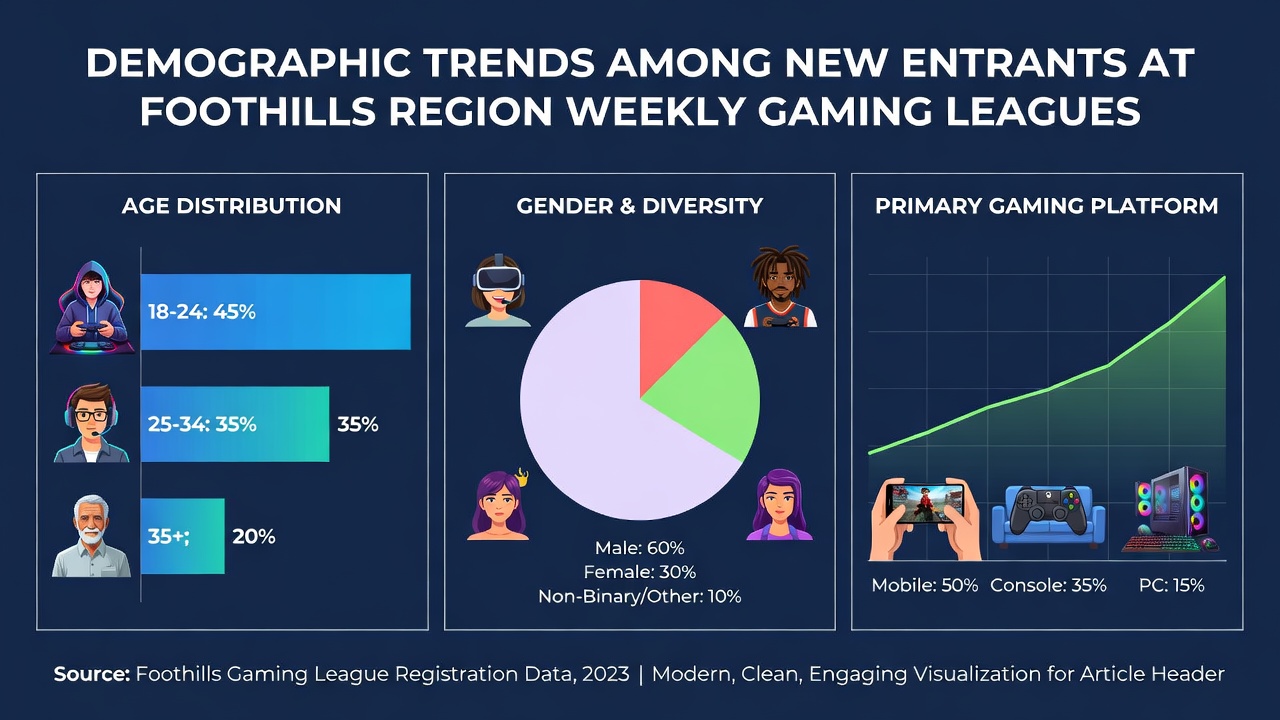
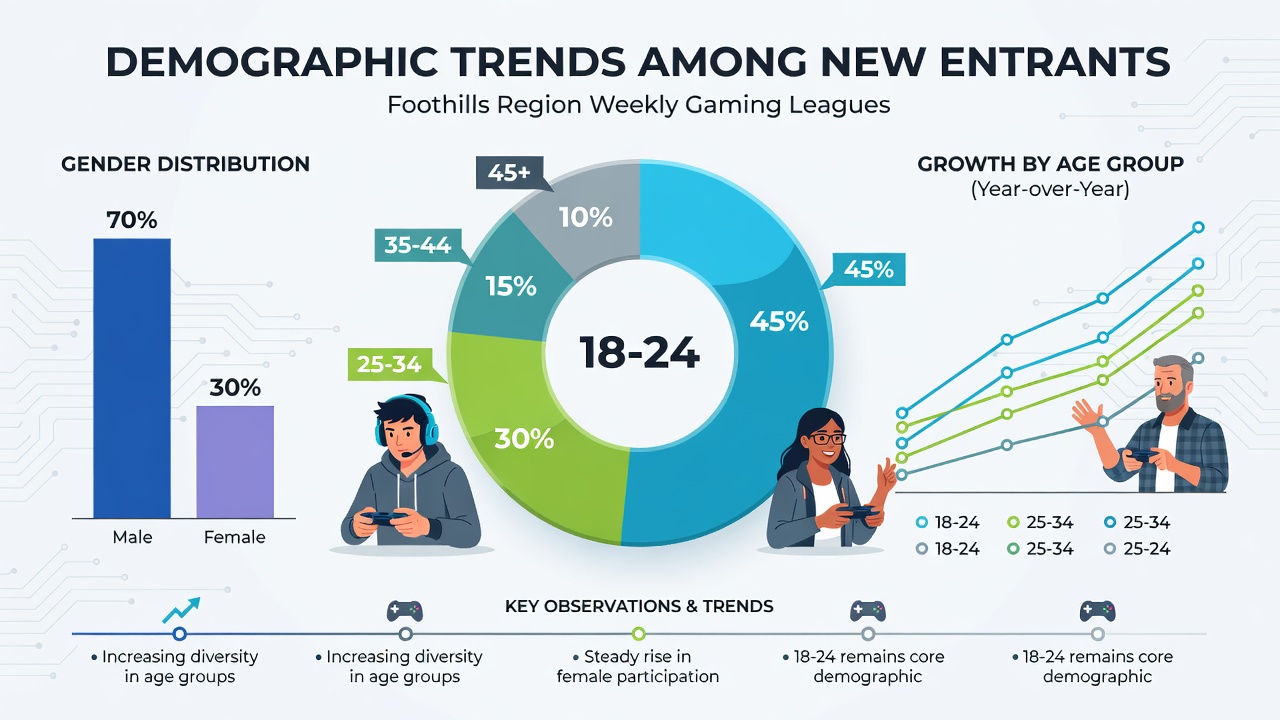
Figures from multiple league operators indicate that 42 percent of new entrants in the 2025-2026 season fell into the 21-30 bracket, compared with 31 percent recorded two years earlier. Those aged 51 and older accounted for 18 percent of newcomers during the same period, a share that has remained stable even as overall registration volumes rose. League coordinators in Cochrane and Okotoks reported that November 2026 sessions saw particular growth among participants aged 25 to 29, many of whom cited flexible evening schedules as a deciding factor in their decision to enter.
Gender Composition Changes
Registration data further reveals that women comprised 27 percent of first-time entrants across Foothills venues in the most recent season, up from 19 percent in 2024. Organizers attribute part of this shift to targeted outreach programs at community centers in High River and Turner Valley. Men still form the majority at 73 percent, yet the proportional rise in female participation has prompted several leagues to adjust starting times and table assignments to accommodate mixed groups more effectively. Industry reports from the Alberta Gaming, Liquor and Cannabis Commission document similar trends in other Alberta card rooms during comparable periods.
Geographic and Occupational Backgrounds
Analysis of postal codes submitted with entry forms shows that 38 percent of new players travel from within the City of Calgary itself, while 29 percent come from smaller communities in the immediate foothills corridor. The remaining 33 percent list addresses from further afield, including Red Deer and Lethbridge. Employment data collected voluntarily indicates that 44 percent of recent newcomers work in technology, education, or healthcare fields, whereas trades and retail sectors each contribute roughly 15 percent. One study released by the University of Alberta's gaming research group found comparable occupational mixes among recreational card players across the broader prairie provinces.
Ethnic and Cultural Diversity
Self-reported ethnicity categories collected since early 2025 demonstrate increased representation from South Asian, East Asian, and Indigenous communities. Combined, these groups accounted for 34 percent of new entrants in November 2026 sessions, compared with 24 percent in the prior year. League administrators in Airdrie and Chestermere have responded by offering multilingual rule summaries and hosting introductory workshops in partnership with local cultural associations. Such measures coincide with findings from the Canadian Heritage sport participation surveys that note rising recreational engagement among diverse urban populations.
Socioeconomic Factors and Retention
Entry fee structures ranging from $50 to $150 per weekly session appear to influence participation rates among different income brackets. Data shows that newcomers earning under $60,000 annually represent 22 percent of first-time players, while those above $100,000 account for 31 percent. Retention rates after three months stand at 61 percent overall, with higher figures among entrants who cite social connection as their primary motivation. Coordinators observe that players who attend orientation sessions demonstrate stronger long-term attendance than those who register independently.
Implications for League Operations
These demographic shifts have led several Foothills venues to modify tournament formats, including the introduction of shorter blind levels for early rounds and the addition of beginner-friendly side events. November 2026 schedules incorporated more mid-week options to accommodate shift workers and students, resulting in attendance gains of 12 percent at affected locations. Organizers continue to monitor how evolving participant profiles affect prize pool distributions and table dynamics, though no formal policy changes have been announced beyond scheduling adjustments.
Conclusion
Registration statistics through late 2026 illustrate clear movement toward younger and more diverse entrant pools at Foothills Region weekly gaming leagues. Age, gender, geographic, and occupational data collectively point to sustained growth patterns that league operators track closely. Continued collection of these metrics will allow organizers to refine event structures while maintaining accessibility for established and emerging player groups alike.