Venue Layout Influences on Strategy Adaptation in Western Canadian Card Competitions
David Reed · Sep 23, 2026

Venue Layout Influences on Strategy Adaptation in Western Canadian Card Competitions
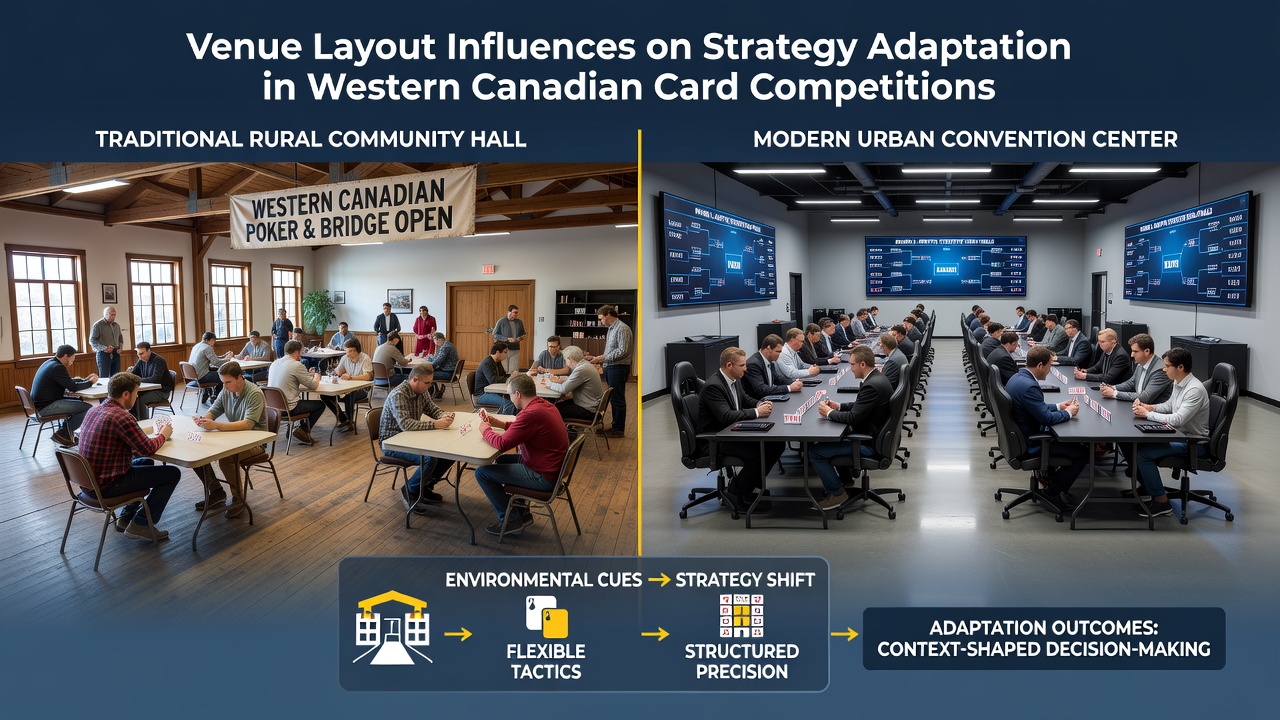
Western Canadian card competitions take place across venues that range from compact casino floors in Calgary to expansive halls in Edmonton and Vancouver, where physical layouts shape how participants adjust their approaches during play. Data from regional tournament records shows that table spacing, sightlines, and ambient noise levels correlate with measurable shifts in betting patterns and hand selection, particularly in events scheduled through 2026.
Regional Venue Configurations and Their Documented Features
Calgary facilities often feature clustered table groupings separated by narrow walkways, whereas Edmonton sites incorporate wider aisles and elevated dealer stands that alter player visibility across multiple tables. Vancouver locations frequently include partitioned sections that limit peripheral awareness, and records from the Alberta Gaming, Liquor and Cannabis Commission indicate these design choices have remained consistent across licensed operators since regulatory updates in prior years. Observers note that September 2026 schedules include several multi-day events at these sites, where layout variations continue to influence pacing from early rounds onward.
Researchers tracking tournament data across prairie provinces have identified patterns in which open-plan rooms encourage earlier position-based adjustments, while segmented areas prompt tighter early-stage ranges until stacks consolidate. Figures from industry reports reveal that average hand volumes per hour differ by up to 12 percent between clustered and spread-out configurations, prompting competitors to recalibrate timing of aggressive lines accordingly.
Positioning, Sightlines, and Tactical Adjustments
Players adapt by monitoring adjacent table dynamics more closely in venues with clear sightlines, which allows for earlier reads on stack sizes and chip movement patterns. In contrast, rooms with obstructed views lead participants to rely more heavily on betting tempo and verbal cues, as documented in analyses of Western Canadian events. Those who study these competitions report that competitors in high-traffic layouts often shorten their decision windows to maintain pace, whereas quieter partitioned spaces permit extended deliberation without external pressure.
Case records from multiple Alberta and British Columbia events demonstrate that corner seating positions correlate with increased check-raising frequency in later stages, while center-table spots show steadier continuation betting rates. These observations align with broader gaming research that examines environmental variables and decision-making sequences, and one study hosted by the University of Alberta examined similar variables in controlled card-game simulations. External factors such as proximity to registration desks or food service areas further modify distraction levels, leading some competitors to incorporate additional mental resets between orbits.
Noise, Flow, and Timing Considerations
Ambient sound levels vary significantly across venues, with open casino floors generating higher background noise that can compress verbal betting announcements and accelerate action. Data collected during 2025 events shows reduced average thinking time per decision in louder environments, prompting shifts toward pre-planned ranges rather than real-time adjustments. Quieter dedicated poker rooms, by comparison, allow for more nuanced verbal interactions and slower deliberate pacing, which some participants exploit through increased light three-betting in early positions.
Traffic flow around tables also affects strategy, as frequent movement near certain seats creates momentary distractions that competitors account for by tightening ranges when seated adjacent to high-traffic zones. Tournament directors have implemented staggered break schedules in larger venues to manage these interruptions, and records indicate this practice reduces variance in hand completion rates across different layout types.
Adaptation Patterns Across Multiple Events
Competitors who participate in circuits spanning Calgary, Edmonton, and Vancouver often maintain separate mental frameworks for each venue type, adjusting pre-flop aggression thresholds based on prior results at similar configurations. September 2026 tournaments are expected to follow established patterns, with organizers publishing seating charts that highlight table proximity to amenities and exits. Those reviewing historical results note that players who pre-scout layouts through venue maps or prior visits demonstrate more consistent performance metrics in later stages of multi-day events.
Industry analyses further connect these environmental factors to broader trends in Western Canadian poker, where regulatory oversight from bodies such as the British Columbia Lottery Corporation ensures standardized table dimensions even as overall room footprints differ. This consistency allows participants to focus adaptation efforts on spacing and visibility rather than equipment variables.
Conclusion
Venue layouts in Western Canadian card competitions continue to serve as measurable variables that influence how strategies evolve throughout tournament lifecycles. Records and observational data indicate that competitors respond to differences in spacing, sightlines, and acoustics through targeted adjustments in timing, positioning awareness, and range construction. As events progress into September 2026 and beyond, these environmental considerations remain central to preparation routines across the region, supported by ongoing documentation from regulatory and academic sources.